
Product Description
Product Description
Product name: seamless steel gas cylinder/industrial gas cylinder
Executive standard: ISO9809-1(TPED),UN ISO9809-1,GB/T5099.1
Hydraulic test pressure, Bar: 250bar/300bar
Nominal working pressure, Bar: 150bar/200bar
Material: 37Mn/34CrMo4
Filling medium: oxygen, nitrogen, carbon dioxide, etc.
Diameter (mm): 219mm~325mm
Exporting countries: China, Mexico, South America, Southeast Asia, Turkey, etc.
Nominal water volume (L): 20L~120L
Length (mm): 660mm~1850mm
Use scenario: filling industrial gas, bottle group
Weight (kg): 26.0KG~120.0KG
Company Profile
Welcome to ZheJiang Clean Energy Co. Ltd.
ZheJiang Clean Energy Co., Ltd. is an enterprise that produces and sells various seamless steel cylinders and composite liner gas cylinders such as compressed natural gas cylinders for vehicles, industrial gas cylinders, and fire-fighting cylinders.The company is committed to providing automotive green energy solutions and related environmental protection supporting services.
Our factory
The company was established in 2009 and entered the Xihu (West Lake) Dis. County Economic Development Zone in ZheJiang in 2014. It has built a standardized factory covering an area of 46,000 square meters.The company has focused on R&D and production for more than 10 years, and its global sales volume has reached 2 million.The company has 6 gas cylinder spinning production lines, 2 heat treatment and tempering lines, as well as machining, spraying and winding production lines. It has an annual production capacity of 360,000 gas cylinders, and can produce industrial steel seamless bottles,CNG vehicles, CNG glass fiber hoop wound gas cylinders for CNG vehicles, carbon fiber wound gas cylinders for CNG vehicles, composite material wound gas cylinders for CNG vehicles, steel seamless cylinders for CNG stations, fire-fighting steel cylinders, and LPG Cylinders, respirators and other products.
After years of business development, the “Clean” gas cylinder brand has gained a high reputation and reputation in the market. Its sales network covers Asia, Europe, and the Americas. The products are exported to more than 50 countries and regions including Italy, Brazil, Thailand, India, Uzbekistan and so on.Beginning in 2018, Green Gas Cylinders have successively become qualified suppliers for Foton, Xihu (West Lake) Dis.feng, Chery, ZheJiang Automobile and other auto plants.
Quality Control
Related certificates
QMS:ISO9001,IATF16949
PRODUCT CERTIFICATES& APPROVALS:
SEAMLESS STEEL CYLINDER:ISO9809-1(TPED),UNISO9809-1,GB/T5099.1
CNG TYPE-1:ISO11439,ECE R110;
CNG TYPE-2:GB24160,ISO11439,ECE R110;
CNG TYPE-3:Q/LD003-2019,ISO11439;
CNG TYPE-4:ISO11439,ECE R110;
LPG COMPOSITE CYLINDER:EN12245:2009,ISO11119
BREATHING AIR COMPOSITE CYLINDER:EN12245:2009
R&D and patents
ZheJiang Clean Energy had lunched research and development program of Type-4(Plastic liner with carbon fiber full-wrapped)
ZheJiang Clean Energy has been conducting research and development plans for CNG-4 (carbon fiber fully wrapped plastic liner) gas cylinders since 2013. Through the efforts of our technicians, by the end of 2018, we have passed all the test procedures and become the first CNG-4 forensic manufacturer in China. In 2019, we established a modern standardized 6S workshop for CNG-4. At the same time, at the end of 2571, the company successfully completed the research and development of LPG composite gas cylinders and obtained relevant international certificates. It is about to complete the construction of the LPG composite gas cylinder production line in the first half of 2571 and quickly put it into production.
Exhibition
We arrange to participate in different exhibitions all around the world every year, including FIGAS&VEHIGAS(Peru), ALTFUELS MEXICO(Mexico), GAS FORUM(Russia Federation), GASSUF(Russian Federation), INSTITUCION FERIAL DE CHINAMFG MADRID(Spain), International NGVS Exhibition& Forum(China)
Package&Logistics
We can provide a series of package and logistics solutions according to the customer’s requirements, to ensure our goods reach our customers on time and safely
FAQ
* Q1: Are you manufacturer or trade company?
* A1: We are a Chinese manufacturer, and have been specializing in manufacturing gas cylinders for more than 10 years. Our company brand is “LD”.
* Q2: What is your daily production capacity?
* A2: Our production capacity everyday is 800~1000 units.
* Q3: What is your delivery time?
* A3: Usually our delivery time is 25-45 days against the advance payment. Mainly it depends on when we get the production materials.
* Q4: What certificates do you have?
* A4: We have ISO9001 and IATF16949 for management system, and ISO9809, ISO11439 and ECE R110 for production approval.
* Q5: Do you accept OEM production?
* A5: Of course, we have served several famous motor OEMs, such as TOYOTA(Thailand)-Thailand, IKCO-Iran, GAZ-Russia, DF-China, and FOTON-China, etc. We would like to serve more customers with our superior quality.
* Q6: Can you provide samples to us?
* A6: Yes, we can provide 1-2 samples for your testing freely, but you need to undertake the logistic cost firstly.
* Q7: Can you customize the products?
* A7: Yes, we can provide you with various customized products. For example, your company brand/logo, different accessories and your favorite colors.
| Material: | 37mn |
|---|---|
| Usage: | Gas |
| Structure: | General Cylinder |
| Power: | Hydraulic |
| Standard: | Standard |
| Pressure Direction: | Single-acting Cylinder |
| Samples: |
US$ 150/Piece
1 Piece(Min.Order) | |
|---|
| Customization: |
Available
|
|
|---|
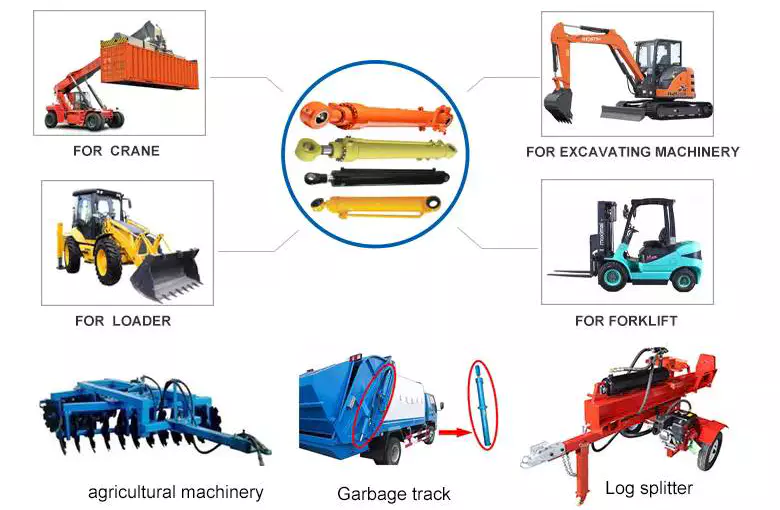
Are there any emerging trends in hydraulic cylinder technology, such as smart features?
Yes, there are several emerging trends in hydraulic cylinder technology, including the integration of smart features. As industries continue to adopt advanced technologies and seek greater efficiency, hydraulic cylinders are being equipped with innovative capabilities to enhance their performance and provide additional benefits. Here are some of the emerging trends in hydraulic cylinder technology:
1. Sensor Integration:
– One of the significant trends in hydraulic cylinder technology is the integration of sensors. Sensors can be embedded within the hydraulic cylinder to monitor various parameters such as pressure, temperature, position, and load. These sensors provide real-time data, allowing for condition monitoring, predictive maintenance, and improved operational control. By collecting and analyzing data, operators can optimize the performance of hydraulic systems, detect potential issues in advance, and prevent failures, resulting in increased reliability and reduced downtime.
2. Connectivity and IoT:
– Hydraulic cylinders are being integrated into the Internet of Things (IoT) ecosystem, enabling connectivity and data exchange. By connecting hydraulic cylinders to a network, operators can remotely monitor and control their performance. IoT-enabled hydraulic cylinders facilitate features such as remote diagnostics, performance optimization, and predictive maintenance. The connectivity aspect allows for better integration with overall equipment systems and enables data-driven decision-making for improved efficiency and productivity.
3. Energy-Efficient Designs:
– With the increasing focus on sustainability and energy efficiency, hydraulic cylinder technology is evolving to incorporate energy-saving features. Manufacturers are developing hydraulic cylinders with improved sealing technologies, reduced friction, and optimized fluid flow dynamics. These advancements minimize energy losses and increase overall system efficiency. Energy-efficient hydraulic cylinders contribute to reduced power consumption, lower operating costs, and a smaller environmental footprint.
4. Advanced Materials and Coatings:
– The use of advanced materials and coatings is another emerging trend in hydraulic cylinder technology. Manufacturers are exploring lightweight materials, such as composites and alloys, to reduce the overall weight of hydraulic cylinders without compromising strength and durability. Furthermore, specialized coatings and surface treatments are being applied to improve corrosion resistance, wear resistance, and lifespan. These advancements enhance the longevity and reliability of hydraulic cylinders, particularly in demanding environments.
5. Intelligent Control Systems:
– Hydraulic cylinder technology is embracing intelligent control systems that optimize performance and enable advanced functionalities. These systems utilize algorithms, machine learning, and artificial intelligence to automate processes, adapt to changing conditions, and optimize hydraulic cylinder movements. Intelligent control systems can adjust parameters in real-time, ensuring precise and efficient operation. This trend allows for increased automation, improved productivity, and enhanced safety in hydraulic system applications.
6. Predictive Maintenance:
– Predictive maintenance is gaining prominence in hydraulic cylinder technology. By utilizing data collected from sensors and monitoring systems, predictive maintenance algorithms can analyze the condition and performance of hydraulic cylinders. This analysis helps to identify potential failures or degradation in advance, enabling proactive maintenance actions. Predictive maintenance reduces unplanned downtime, extends the lifespan of hydraulic cylinders, and optimizes maintenance schedules, resulting in cost savings and improved equipment availability.
7. Enhanced Safety Features:
– Hydraulic cylinder technology is incorporating enhanced safety features to improve operator and equipment safety. These features include integrated safety valves, load monitoring systems, and emergency stop functionalities. Safety systems in hydraulic cylinders help prevent accidents, protect against overloads, and ensure reliable operation. The integration of advanced safety features contributes to safer working environments and compliance with stringent safety regulations.
These emerging trends in hydraulic cylinder technology demonstrate the industry’s focus on innovation, performance optimization, and sustainability. The integration of smart features, connectivity, advanced materials, and predictive maintenance capabilities enables hydraulic cylinders to operate more efficiently, provide real-time insights, and enhance overall system performance. As technology continues to advance, hydraulic cylinder technology is expected to evolve further, offering increased functionality and efficiency for various industries and applications.
Integration of Hydraulic Cylinders with Equipment Requiring Rapid and Dynamic Movements
Hydraulic cylinders can indeed be integrated with equipment that requires rapid and dynamic movements. While hydraulic systems are generally known for their ability to provide high force and precise control, they can also be designed and optimized for applications that demand fast and dynamic motion. Let’s explore how hydraulic cylinders can be integrated with such equipment:
- High-Speed Hydraulic Systems: Hydraulic cylinders can be part of high-speed hydraulic systems designed specifically for rapid and dynamic movements. These systems incorporate features such as high-flow valves, optimized hydraulic circuitry, and responsive control systems. By carefully engineering the system components and hydraulic parameters, it is possible to achieve the desired speed and responsiveness, enabling the equipment to perform rapid movements.
- Valve Control: The control of hydraulic cylinders plays a crucial role in achieving rapid and dynamic movements. Proportional or servo valves can be used to precisely control the flow of hydraulic fluid into and out of the cylinder. These valves offer fast response times and precise flow control, allowing for rapid acceleration and deceleration of the cylinder’s piston. By adjusting the valve settings and optimizing the control algorithms, equipment can be designed to execute dynamic movements with high speed and accuracy.
- Optimized Cylinder Design: The design of hydraulic cylinders can be optimized to facilitate rapid and dynamic movements. Lightweight materials, such as aluminum alloys or composite materials, can be used to reduce the moving mass of the cylinder, enabling faster acceleration and deceleration. Additionally, the cylinder’s internal components, such as the piston and seals, can be designed for low friction to minimize energy losses and enhance responsiveness. These design optimizations contribute to the overall speed and dynamic performance of the equipment.
- Accumulator Integration: Hydraulic accumulators can be integrated into the system to enhance the dynamic capabilities of hydraulic cylinders. Accumulators store pressurized hydraulic fluid, which can be rapidly released to supplement the flow from the pump during high-demand situations. This stored energy can provide an extra boost of power, allowing for faster and more dynamic movements. By strategically sizing and configuring the accumulator, the system can be optimized for the specific rapid and dynamic requirements of the equipment.
- System Feedback and Control: To achieve precise and dynamic movements, hydraulic systems can incorporate feedback sensors and advanced control algorithms. Position sensors, such as linear potentiometers or magnetostrictive sensors, provide real-time position feedback of the hydraulic cylinder. This information can be used in closed-loop control systems to maintain precise positioning and execute rapid movements. Advanced control algorithms can optimize the control signals sent to the valves, ensuring smooth and dynamic motion while minimizing overshooting or oscillations.
In summary, hydraulic cylinders can be integrated with equipment that requires rapid and dynamic movements by utilizing high-speed hydraulic systems, employing responsive valve control, optimizing cylinder design, integrating accumulators, and incorporating feedback sensors and advanced control algorithms. These measures enable hydraulic systems to deliver the speed, responsiveness, and precision necessary for equipment operating in dynamic environments. By leveraging the capabilities of hydraulic cylinders, manufacturers can design and integrate systems that meet the requirements of applications demanding rapid and dynamic movements.
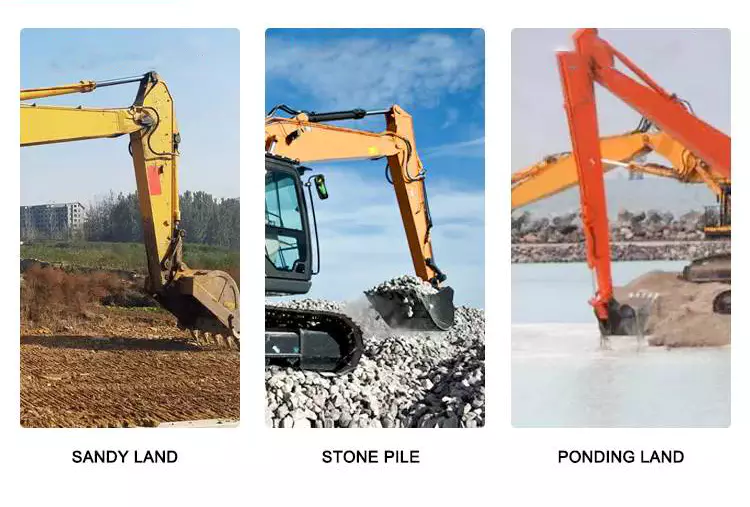
How do hydraulic cylinders generate force and motion using hydraulic fluid?
Hydraulic cylinders generate force and motion by utilizing the principles of fluid mechanics, specifically Pascal’s law, in conjunction with the properties of hydraulic fluid. The process involves the conversion of hydraulic energy into mechanical force and linear motion. Here’s a detailed explanation of how hydraulic cylinders achieve this:
1. Pascal’s Law:
– Hydraulic cylinders operate based on Pascal’s law, which states that when pressure is applied to a fluid in a confined space, it is transmitted equally in all directions. In the context of hydraulic cylinders, this means that when hydraulic fluid is pressurized, the force is evenly distributed throughout the fluid and transmitted to all surfaces in contact with the fluid.
2. Hydraulic Fluid and Pressure:
– Hydraulic systems use a specialized fluid, typically hydraulic oil, as the working medium. This fluid is stored in a reservoir and circulated through the system by a hydraulic pump. The pump pressurizes the fluid, creating hydraulic pressure that can be controlled and directed to various components, including hydraulic cylinders.
3. Cylinder Design and Components:
– Hydraulic cylinders consist of several key components, including a cylindrical barrel, a piston, a piston rod, and various seals. The barrel is a hollow tube that houses the piston and allows for fluid flow. The piston divides the cylinder into two chambers: the rod side and the cap side. The piston rod extends from the piston and provides a connection point for external loads. Seals are used to prevent fluid leakage and maintain hydraulic pressure within the cylinder.
4. Fluid Input and Motion:
– To generate force and motion, hydraulic fluid is directed into one side of the cylinder, creating pressure on the corresponding surface of the piston. This pressure is transmitted through the fluid to the other side of the piston.
5. Force Generation:
– The force generated by a hydraulic cylinder is a result of the pressure applied to a specific surface area of the piston. The force exerted by the hydraulic cylinder can be calculated using the formula: Force = Pressure × Area. The area is determined by the diameter of the piston or the piston rod, depending on which side of the cylinder the fluid is acting upon.
6. Linear Motion:
– As the pressurized hydraulic fluid acts on the piston, it generates a force that moves the piston in a linear direction within the cylinder. This linear motion is transferred to the piston rod, which extends or retracts accordingly. The piston rod can be connected to external components or machinery, allowing the generated force to perform various tasks, such as lifting, pushing, pulling, or controlling mechanisms.
7. Control and Regulation:
– The force and motion generated by hydraulic cylinders can be controlled and regulated by adjusting the flow of hydraulic fluid into the cylinder. By regulating the flow rate, pressure, and direction of the fluid, the speed, force, and direction of the cylinder’s movement can be precisely controlled. This control allows for accurate positioning, smooth operation, and synchronization of multiple cylinders in complex machinery.
8. Return and Recirculation of Fluid:
– After the hydraulic cylinder completes its stroke, the hydraulic fluid on the opposite side of the piston needs to be returned to the reservoir. This is typically achieved through hydraulic valves that control the flow direction, allowing the fluid to return and be recirculated in the system for further use.
In summary, hydraulic cylinders generate force and motion by utilizing the principles of Pascal’s law. Pressurized hydraulic fluid acts on the piston, creating force that moves the piston in a linear direction. This linear motion is transferred to the piston rod, allowing the generated force to perform various tasks. By controlling the flow of hydraulic fluid, the force and motion of hydraulic cylinders can be precisely regulated, contributing to their versatility and wide range of applications in machinery.


editor by CX 2023-12-10