
Product Description
Company Profile
IATF16949 and ISO 9001 certified precision CNC machining service company, started in 2006, Infinity provides customers with more than 1 million sensor components every year, such as the sensor housing, processing connectors, adapters, mounting rods, and mounting plates for flow sensors, pressure sensors, and temperature sensors. Product materials include stainless steel, copper alloy, aluminum alloy, and special alloys. The complex, precise, reliable, and safe manufacturing process ensures the high-quality requirements of customers’ products.
With over 3000m2 production workshop, Infinity company provides whole processing from material cutting to inspection & packing and shipment service.
Workshop Overview
| Equipment List | |||||
| Name | No. of set | Model/Spec. | Origin | ||
| Infinity Precision Machining main Equipment | CNC Vertical Machining Center |
2 | VJ850,850X500X520/4-Axis | ZheJiang | |
| CNC Vertical Machining Center |
2 | Dooson DNM515,1571*540*510 | China | ||
| CNC Vertical Machining Center |
1 | MAZAK VCN530CL | China | ||
| Horizontal CNC Lathe | 8 | OKUMA L250-E | ZheJiang | ||
| Horizontal CNC Lathe | 1 | OKUMA L300-M/2.5-Axis | ZheJiang | ||
| Horizontal CNC Lathe | 1 | OKUMA L400-E | ZheJiang | ||
| Horizontal CNC Lathe | 3 | OKUMA L200EMY | ZheJiang | ||
| Ultrasonic Cleaning machine | 2 | KC-6000W | China | ||
| Automatic Metal Band Sawing machine |
4 | GHS4232 | China | ||
| Flat Grinder | 1 | M7132B | China | ||
| Wire Cutter | 1 | DK7740 | China | ||
| Pipe bending machine | 2 | China | |||
| Shape mill | 1 | China | |||
| Vibration Burnisher | 1 | N/A | China | ||
| Co2 gas-shielded welding | 4 | FN250 | China | ||
| Swiss-type CNC machine | 1 | CSBII 250 | ZheJiang | ||
| Drilling and tapping machine | 4 | ZS4116 | China | ||
Quality Control Process
Infinity Industries, Inc. provides customers with complete inspection services, from first article inspection, to process random inspection, and final inspection, all of which are implemented in strict accordance with the customer’s drawings.
| Name | No. of set | Model/Spec. | Origin | ||
| Inspection Instrument | 3D-Measuring System | 1 | Hexagon,06.08.06 | Switzerland | |
| Projector | 1 | 3D Family VME-300 | ZheJiang | ||
| Contour graph | 1 | Mitutoyo contracer CV-2100 | Japan | ||
| Surface rough meter | 1 | TR210 | China | ||
| Angle Measurement Instrument | 3 | 0~360° | China | ||
| Pin Gage | variety | φ25+/-0.05/φ25.3+/-0.05/φ35+/-0.05 | China | ||
| R-gage | 2 | R1~R6.5mm | China | ||
| Inside Micrometer | 5 | 0-30mm | China | ||
| Outside Micrometer | 5 | 25~50mm | China | ||
| Digital Height Guage | 20 | 0~300mm | China | ||
| Digital Inside Groove Capliers | 5 | 0~150mm | China | ||
| Digital Vernier Calipers | variety | 0~200mm/0~300mm | China | ||
| Mechanical Vernier Calipers | variety | 0~150mm | China | ||
| Thread Plug Guage | variety | 1/2-13UNC,3/4-16UNF,7/16-20UNF,1/4-20UNC-2B/NPSL1/8-27/1/2-14NPT/3/4NPT/M18,26,27X1.5-6h/M4-6h/1/2-14NPSM | China | ||
| Thread Ring Guage | variety | M12X0.5-6h/7/8-14UNF,3/4-16UNF,1/2-20UNF,5/8-18UNF,9/8-12UNF,5/8-24UNF,9/16-18UNF-2A/M18X1.5-6g/G1/2A/G1/4-2A/1/4-18NPT/M12X1-6g/M12X1-6h/1/2-14NPT | China | ||
Packaging & Logistics
In principle, all legal requirements must be complied with in our packaging and logistics process. These are in particular:
– dangerous goods regulation
– national/international regulations for the treatment of wooden pallets
– requirements of sea freight, if necessary
– requirements of air cargo, if necessary
– packaging directives from our customers
Further applies to:
– The transport safety always rests with the consignor. Regarding cargo securing the legal regulations apply according to StVO and HGB and the VDI Xihu (West Lake) Dis.line 2700.
– Infinity Company shall treat the goods during storage and shipping in such a way that the agreed-upon quality standard is preserved.
– The storage at our location shall be made according to the FIFO principle.
– All packaging materials must be free of attached silicone (e.g. silicone oil) and contain silicone.
Environmental Requirements / Occupational Safety
No danger to humans or the environment may occur through the delivery of the products. Hazardous materials (dangerous goods) must be labeled in such a way that the dangers are easily recognizable and visible from the outside.
– Individual packs / reusable packaging / refillable containers should not exceed an individual weight of 15 kg.
– The packing height of the loading unit must not exceed a maximum of 1600 mm.
– The maximum weight of the load unit must not exceed 1200 kg.
– The maximum dimension of pallets must not exceed 1200 mm x 1000 mm.
– Individual packs / reusable packaging / returnable containers/cargo units must not be damaged.
– Loading units must be accessible (at least 100 mm lower ride height).
| Certification: | RoHS, ISO9001, IATF16949 |
|---|---|
| Pressure: | Medium Pressure |
| Work Temperature: | Normal Temperature |
| Acting Way: | Double Acting |
| Working Method: | Straight Trip |
| Adjusted Form: | Regulated Type |
| Samples: |
US$ 45/Piece
1 Piece(Min.Order) | |
|---|
| Customization: |
Available
|
|
|---|
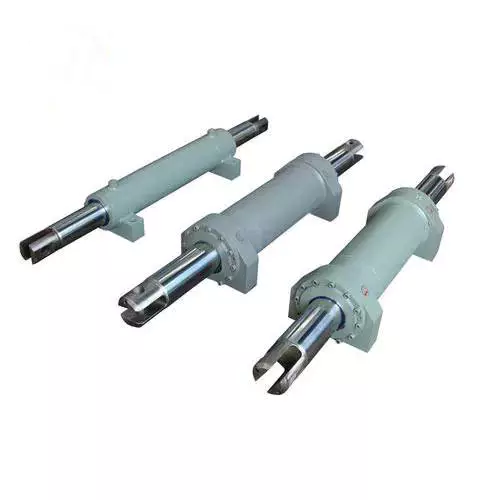
How do manufacturers ensure the durability and reliability of hydraulic cylinders?
Manufacturers employ various strategies and techniques to ensure the durability and reliability of hydraulic cylinders. These measures are crucial as hydraulic cylinders are often subjected to demanding operating conditions and heavy loads. To ensure their longevity and dependable performance, manufacturers focus on the following aspects:
1. High-Quality Materials:
– Manufacturers use high-quality materials in the construction of hydraulic cylinders. Components such as cylinder barrels, piston rods, seals, and bearings are made from materials that possess excellent strength, corrosion resistance, and wear resistance properties. Common materials used include high-grade steel alloys, chrome-plated rods, and specialized coatings. The selection of appropriate materials ensures that hydraulic cylinders can withstand the stresses, pressures, and environmental conditions they encounter during operation.
2. Robust Design:
– Hydraulic cylinders are designed to withstand high loads and harsh operating conditions. Manufacturers use computer-aided design (CAD) software and finite element analysis (FEA) techniques to optimize the cylinder’s structural integrity and performance. The design includes factors such as proper wall thickness, reinforcement in critical areas, and appropriate sizing of components. Robust design practices ensure that hydraulic cylinders can withstand the forces and stresses they encounter, preventing premature failure and ensuring durability.
3. Quality Manufacturing Processes:
– Manufacturers follow stringent quality control measures during the manufacturing processes of hydraulic cylinders. These processes include precision machining, welding, heat treatment, and surface finishing. Skilled technicians and advanced machinery are employed to ensure dimensional accuracy, proper fitment of components, and overall quality. By adhering to strict manufacturing processes and quality standards, manufacturers can produce hydraulic cylinders with consistent performance and reliability.
4. Sealing Technology:
– The sealing system of hydraulic cylinders is critical for their durability and reliability. Manufacturers utilize advanced sealing technologies such as lip seals, O-rings, and composite seals to prevent fluid leakage and ingress of contaminants. Properly designed and high-quality seals ensure that hydraulic cylinders can maintain their performance over extended periods. Seals are tested for their compatibility with the hydraulic fluid, pressure resistance, and resilience to environmental factors such as temperature and humidity.
5. Performance Testing:
– Manufacturers subject hydraulic cylinders to rigorous performance testing to validate their durability and reliability. These tests simulate real-world operating conditions and evaluate factors such as load capacity, pressure resistance, fatigue life, and leakage. Performance testing helps identify any design flaws or weaknesses in the hydraulic cylinder and allows manufacturers to make necessary improvements. By conducting thorough performance testing, manufacturers can ensure that hydraulic cylinders meet or exceed the required performance standards.
6. Compliance with Industry Standards:
– Manufacturers adhere to industry standards and regulations to ensure the durability and reliability of hydraulic cylinders. These standards, such as ISO 6020/6022 and NFPA T3.6.7, provide guidelines for design, manufacturing, and performance requirements. By following these standards, manufacturers ensure that hydraulic cylinders are designed and built to meet specific quality and safety criteria. Compliance with industry standards helps establish a baseline for durability and reliability and instills confidence in the performance of hydraulic cylinders.
7. Regular Maintenance and Service:
– Manufacturers provide recommendations for regular maintenance and service of hydraulic cylinders. This includes guidelines for lubrication, inspection of components, and replacement of wear parts such as seals and bearings. Following the manufacturer’s maintenance guidelines helps ensure the long-term durability and reliability of hydraulic cylinders. Regular maintenance also allows for the early detection of potential issues, preventing major failures and extending the service life of the hydraulic cylinders.
8. Customer Support and Warranty:
– Manufacturers provide customer support and warranty services to address any issues that arise with hydraulic cylinders. They offer technical assistance, troubleshooting guidance, and replacement of defective components. The warranty ensures that customers receive reliable and durable hydraulic cylinders and provides recourse in case of any manufacturing defects or premature failures. Strong customer support and warranty policies reflect the manufacturer’s commitment to the durability and reliability of their products.
In summary, manufacturers ensure the durability and reliability of hydraulic cylinders through the use of high-quality materials, robust design practices, stringent manufacturing processes, advanced sealing technology, thorough performance testing, compliance with industry standards, regular maintenance guidelines, and customer support with warranty services. By focusing on these aspects, manufacturers can produce hydraulic cylinders that can withstand demanding conditions, provide long service life, and deliver reliable performance in various applications.
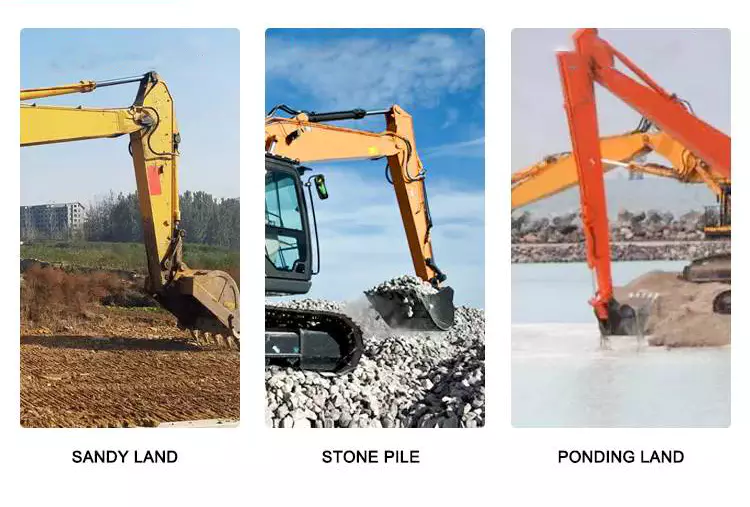
Can you provide real-world examples of machinery that heavily rely on hydraulic cylinders?
Hydraulic cylinders are widely used in various industries and applications due to their ability to provide powerful and precise linear motion. They play a crucial role in enabling the operation of heavy machinery that requires controlled force and movement. Here are some real-world examples of machinery that heavily rely on hydraulic cylinders:
1. Construction Equipment:
– Hydraulic cylinders are extensively used in construction machinery, such as excavators, bulldozers, loaders, and cranes. These machines rely on hydraulic cylinders to perform tasks like lifting heavy loads, extending and retracting booms, tilting buckets, and controlling the movement of various components. Hydraulic cylinders provide the power and precision required to handle the demanding conditions and heavy loads encountered in construction projects.
2. Agricultural Machinery:
– Many agricultural machines, including tractors, combine harvesters, and sprayers, utilize hydraulic cylinders for critical operations. Hydraulic cylinders are used to control the movement of attachments, such as front loaders, backhoes, and plows. They enable functions like lifting and lowering implements, adjusting cutting heights, and controlling the positioning of harvesting equipment. Hydraulic cylinders enhance efficiency and productivity in agricultural operations.
3. Material Handling Equipment:
– Hydraulic cylinders are integral components of material handling equipment, such as forklifts, pallet jacks, and cranes. These machines rely on hydraulic cylinders to lift and lower loads, tilt platforms or forks, and control the movement of lifting mechanisms. Hydraulic cylinders provide the necessary strength and precision to handle heavy loads and ensure safe and efficient material handling operations.
4. Industrial Machinery:
– Various industrial machinery and equipment heavily rely on hydraulic cylinders for critical functions. Examples include hydraulic presses, injection molding machines, metal-forming machines, and hydraulic-powered robots. Hydraulic cylinders enable precise control of force and movement in these applications, allowing for accurate shaping, pressing, and assembly processes.
5. Mining Equipment:
– Hydraulic cylinders are extensively used in mining machinery and equipment. Underground mining machines, such as continuous miners and longwall shearers, utilize hydraulic cylinders for cutting, shearing, and roof support operations. Surface mining equipment, including hydraulic shovels, draglines, and haul trucks, rely on hydraulic cylinders for tasks like bucket movement, boom extension, and vehicle suspension.
6. Automotive Industry:
– The automotive industry extensively utilizes hydraulic cylinders in various applications. Hydraulic cylinders are employed in vehicle suspension systems, power steering systems, convertible tops, and hydraulic brake systems. They enable smooth and controlled movement, precise steering, and efficient braking in automobiles.
7. Aerospace and Aviation:
– Hydraulic cylinders are utilized in aerospace and aviation applications, such as aircraft landing gear systems, wing flaps, and cargo handling equipment. Hydraulic cylinders provide the necessary force and control for extending and retracting landing gear, adjusting wing flaps, and operating cargo doors, ensuring safe and reliable aircraft operations.
8. Marine and Offshore Industry:
– Hydraulic cylinders are essential components in marine and offshore equipment, including ship cranes, winches, and hydraulic-powered anchor systems. They enable lifting, lowering, and positioning of heavy loads, as well as the control of various marine equipment.
These are just a few examples of machinery and industries that heavily rely on hydraulic cylinders. The versatility, power, and precise control offered by hydraulic cylinders make them indispensable in a wide range of applications, where controlled linear motion and force are essential.
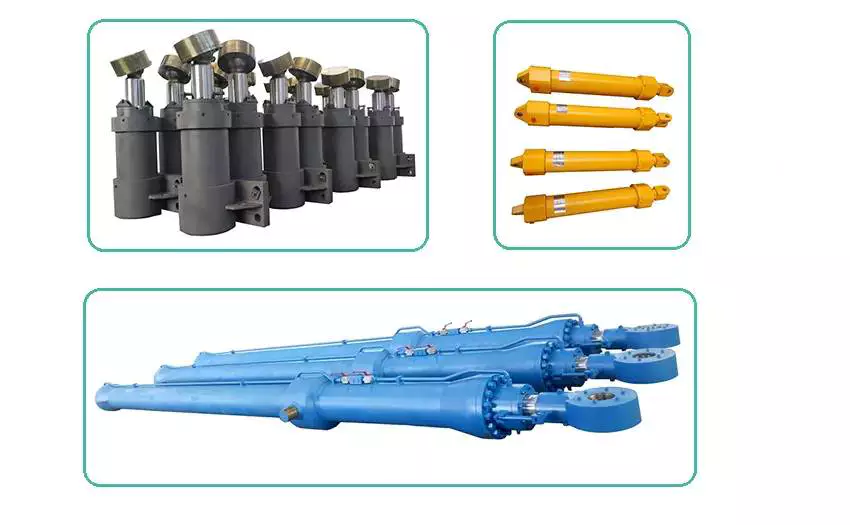
Can hydraulic cylinders be adapted for use in both industrial and mobile equipment?
Yes, hydraulic cylinders can be adapted for use in both industrial and mobile equipment. The versatility and adaptability of hydraulic systems make them suitable for a wide range of applications across various industries. Here’s a detailed explanation:
1. Industrial Equipment:
– Hydraulic cylinders are extensively used in industrial equipment such as manufacturing machinery, construction equipment, material handling systems, and heavy-duty machinery. They provide the necessary force and controlled movement for tasks such as lifting, pushing, pulling, and positioning heavy loads. Industrial hydraulic cylinders are typically designed for robustness, durability, and high load-bearing capacities to withstand the demanding environments and heavy-duty applications encountered in industries.
2. Mobile Equipment:
– Hydraulic cylinders are also widely adopted in mobile equipment, including agricultural machinery, mining equipment, forestry machinery, and transportation vehicles. These cylinders enable various functions such as tilting, lifting, steering, and stabilizing. Mobile hydraulic cylinders are designed to be compact, lightweight, and efficient to meet the specific requirements of mobile applications. They are often integrated into hydraulic systems that power multiple functions in a single machine.
3. Adaptability:
– One of the key advantages of hydraulic cylinders is their adaptability. They can be customized and configured to suit different operating conditions, equipment sizes, load capacities, and speed requirements. Hydraulic cylinder manufacturers offer a wide range of sizes, stroke lengths, mounting options, and rod configurations to accommodate diverse applications. This adaptability allows hydraulic cylinders to be utilized in both industrial and mobile equipment, serving various purposes across different sectors.
4. Mounting Options:
– Hydraulic cylinders can be adapted to different mounting arrangements to suit the specific requirements of industrial and mobile equipment. They can be mounted in various orientations, including vertical, horizontal, or at an angle. Different mounting options, such as flange mounts, trunnion mounts, and clevis mounts, provide flexibility in integrating hydraulic cylinders into different equipment designs.
5. Integration with Hydraulic Systems:
– Hydraulic cylinders are often part of a larger hydraulic system that includes components such as pumps, valves, hoses, and reservoirs. These systems can be tailored to meet the specific needs of both industrial and mobile equipment. The hydraulic system’s design and configuration can be adapted to provide the necessary flow rates, pressures, and control mechanisms required for optimal performance in the intended application.
6. Control and Automation:
– Hydraulic cylinders in both industrial and mobile equipment can be integrated with control systems and automation technologies. This allows for precise and automated control of the cylinder’s movement and function. Proportional control valves, sensors, and electronic controls can be incorporated to achieve accurate positioning, speed control, and synchronization of multiple hydraulic cylinders, enhancing overall equipment performance and productivity.
7. Safety Considerations:
– Hydraulic cylinders for both industrial and mobile equipment are designed with safety in mind. They often feature built-in safety mechanisms such as overload protection, pressure relief valves, and emergency stop systems to prevent accidents and equipment damage. Safety standards and regulations specific to each industry are taken into account during the design and adaptation of hydraulic cylinders for different applications.
Overall, hydraulic cylinders offer the adaptability and performance required for use in both industrial and mobile equipment. Their versatility, customizable features, mounting options, integration capabilities, and safety considerations make them suitable for a wide range of applications across diverse industries. Whether it’s heavy-duty industrial machinery or mobile equipment operating in challenging environments, hydraulic cylinders can be adapted to meet the specific needs and requirements of various equipment types.


editor by CX 2023-11-22