
Product Description
Product Description
FC telescopic hydraulic cylinder has always been the core product of our company, the company according to the market demand, continuous technical iteration and process innovation, mastered its core technology. The product has the following advantages:
1.World-class processing technology ensures stable and reliable quality of FC type front-end telescopic cylinders with outer cover, more suitable for overload environment;
2.High quality alloy seamless steel pipe, with better mechanical properties, gives full play to the strength of big lifting capacity better;
3.High-end gantry type linear electroplating production line improves the anti-corrosion and hardness of the cylinder better;
4.The world famous brands of seals ensure the sealing performance;
5.Supplied to famous tipper trucks brands-SINOTRUCK/CIMC/SHACMAN/JAC and tested by the market for over 10 years.
Product Model
| ITEM | MODEL NO. | # of Stages | Largest Moving Stage Diameter(mm) | stroke(mm) | the largest sleeve OD(mm) | mounting distance(mm) |
| 1 | WTFC 4TG-E152*4280ZJ | 4 | 152 | 4280 | 272 | 335 |
| 2 | WTFC 5TG-E152*4280ZJ | 5 | 152 | 4280 | 272 | 335 |
| 3 | WTFC 4TG-E160*5390ZJ | 4 | 160 | 5390 | 272 | 335 |
| 4 | WTFC 4TG-F175*4280ZJ | 4 | 175 | 4280 | 272 | 335 |
| 5 | WTFC 4TG-F175*5390ZJ | 4 | 175 | 5390 | 272 | 335 |
| 6 | WTFC 4TG-F175*5700ZJ | 4 | 175 | 5700 | 272 | 335 |
| 7 | WTFC 5TG-F175*5390ZJ | 5 | 175 | 5390 | 272 | 335 |
| 8 | WTFC 5TG-F175*5700ZJ | 5 | 175 | 5700 | 272 | 335 |
| 9 | WTFC 4TG-F185*4650ZJ | 4 | 185 | 4650 | 272 | 335 |
| 10 | WTFC 4TG-F185*5000ZJ | 4 | 185 | 5000 | 272 | 335 |
| 11 | WTFC 4TG-F185*5700ZJ | 4 | 185 | 5700 | 272 | 335 |
| 12 | WTFC 4TG-F185*6180ZJ | 4 | 185 | 6180 | 272 | 335 |
| 13 | WTFC 5TG-F185*5000ZJ | 5 | 185 | 5000 | 272 | 335 |
| 14 | WTFC 4TG-F200*6000ZJ | 4 | 200 | 6000 | 272 | 335 |
| 15 | WTFC 5TG-F200*6500ZJ | 5 | 200 | 6500 | 272 | 335 |
| 16 | WTFC 4TG-F175*4280BH | 4 | 175 | 4280 | 244 | 325 |
| 17 | WTFC 4TG-F175*4650BH | 4 | 175 | 4650 | 244 | 325 |
| 18 | WTFC 4TG-F175*5390BH | 4 | 175 | 5390 | 244 | 325 |
| 19 | WTFC 4TG-F185*5700BH | 4 | 185 | 5700 | 244 | 325 |
| 20 | WTFC 4TG-F185*6000BH | 4 | 185 | 6000 | 244 | 325 |
| 21 | WTFC 4TG-F185*6180BH | 4 | 185 | 6180 | 244 | 325 |
| 22 | WTFC 4TG-F200*6000BH | 4 | 200 | 6000 | 244 | 325 |
| 23 | WTFC 4TG-F175*4280JT | 4 | 175 | 4280 | 244 | 325 |
| 24 | WTFC 4TG-F175*4650JT | 4 | 175 | 4650 | 244 | 325 |
| 25 | WTFC 4TG-F175*5390JT | 4 | 175 | 5390 | 244 | 325 |
| 26 | WTFC 4TG-F200*5700JT | 4 | 200 | 5700 | 272 | 325 |
| 27 | WTFC 4TG-F200*6180JT | 4 | 200 | 6180 | 272 | 325 |
| 28 | WTFC 4TG-F175*4450HT | 4 | 175 | 4450 | 244 | 345 |
| 29 | WTFC 5TG-F200*6180AF | 5 | 200 | 6180 | 272 | 325 |
Our products are designed with the following advantages:
1.There are many product models, which can meet the needs of most customers;
2.We have a professional design team, they are 1 of the driving forces for our development;
3.Our design team can customize products according to the needs of customers to meet the needs of different customers.
About Us
ZheJiang CHINAMFG Hydraulic Co., Ltd is one of the biggest hydraulic cylinder manufacturer in China, specialized in design, R & D and manufacturing of hydraulicmachinery products etc, with its annual production capaciy of 200000 sets.My company with 600 employees in it ,covers an area of 180000 square meters.There are 700 sets of mnufacturing equipment. Our company invested 10 million RMB in 2 cold drawing lines, 1 is 200 tons and the other is 320 tons with acid cleaning, phosphatization, heat treatment and alignment cutting.
All production steps are finished in the same factory, and this guarantees good quality and short lead time. All the products are ISO/TS16949, CCRI, CCS, and DNV and ABS certified. We passed ISO/TS16949 International Quality System Certification, and we are an “AAA Level Standardization and Good Behavior Enterprise“. The technology center of our company was rated as Provincial Technology Center, and our company has become the base of production, education and research of ZheJiang University of Science and Technology.Advanced equipment, excellent talents and strict management help us develop first-class products.
The company has been deeply rooted in the hydraulic field for 20 years, with a stable management team and key technical personnel. Adhering to the corporate philosophy of “creating hydraulic products for customers“, the company has persisted in research and development investment for many years, mastering core production process technologies such as cold drawing technology, sealing structure optimization technology, piston rod heat treatment and surface treatment technology, mirror polishing roughness control technology, and accumulator dual chamber technology. Starting from the actual needs of customers, the company continuously innovates and gradually positions itself in the mid to high end market, providing high-quality products for customers in industries such as automobiles, coal mines, petroleum, and engineering machinery with high-quality services.
Production Process & Equipmnet
Cold Drawing
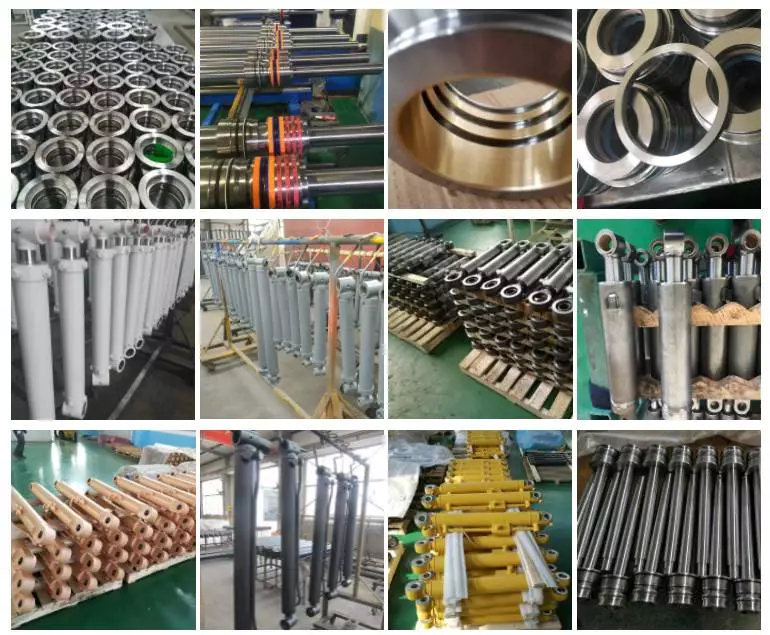
The utilization rate and performance of the material are improved through the cold drawing process.
Heat Treatment
The surface hardness of the material is improved by heat treatment.
Boring
Through boring treatment, the finish of the inner hole of the material is improved.
Hard Chrome
Through chrome plating treatment, the corrosion resistance of the material is improved and the service life is prolonged.
Every piece of hydraulic cylinder are processed through dozens of steps, including raw material processing, cylinder assembly, painting, etc. Each step is indispensable, and we also have advanced processing equipment to ensure that the processing dimensions of raw materials meet the requirements of product production.
Quality Inspection
Raw Material Inspection:
The material of raw materials is detected by carbon and sulfur analyzers and spectrometers.
Material Performance Inspection:
The tensile strength, yield strength, hardness and other properties of the material are tested by the material tensile test bench,Brinell hardness tester, CHINAMFG hardness tester and other equipment.
Process Inspection:
The geometric shape, shape and position tolerance and finish of semi-finished products are detected by 3 coordinates,
profilometer and ultrasonic roughness meter.
Chrome Plating Control:
The thickness, hardness and corrosion resistance of the product coating are tested by ultrasonic hardness tester, ultrasonic thickness gauge and salt spray test bench.
Every piece of hydraulic cylinder are tested and will send out only after they are pasted the each test. Our company has abundant technical force and perfect testing means. By making wide technical and business cooperation with many related enterprises, universities, colleges and institutes both at home and abroad, and employing senior engineers and software engineers, we have greatly strengthened and improved our designing, processing, and testing abilities.
Packaging & Transportation
To better ensure the safety of your goods, professional, environmentally friendly, convenient and efficient packaging services will be provided. Plywood Case, or according to your requirements, We will pack and ship the products in strict accordance with the requirements to ensure that they can be delivered to our esteemed customers in perfect condition.
Credentials & Collaborations
ZheJiang CHINAMFG Hydraulic Co., Ltd. is a very excellent enterprise in all aspects, so we have gained a lot of honors and certificates at home and abroad, and we are the partners of many leading enterprises in China, we provide them with first-class hydraulic products and services, deeply trusted by them, at the same time and in the right place, we will also participate in various exhibitions to promote our latest products, I believe your choice will make us more successful.
FAQ
Q1: Are you a manufacture or a trade company?
Manufacture, we are the leader manufacturer of hydraulic industry in China with 20 years experience and technology.
Q2: Do you have quality control system?
Yes, The quality management system introduced is: ISO/TS 16949:2009-certified by NQA and IATF cert.
Q3: How can i get a booklet and buy a cylinder from you?
Very easy! Just leave me a message or email and tell me your requirement, let me know you are interesting in our products.I will talk with you for the details soon!
Q4: Can you tell me the price for the cylinder?
1. Please help inform your drawing with detail requirement.
2. Please help inform the cylinder NO. after you check our booklet.
3. Please help inform the tipping capacity, strokes, number of stages, closed length, mounting type and size and other information.
4. Please also help inform the quantities, this is very important.
5. Your destination port.
Q5: Do your products come with a warranty?
Yes, we have 14 months warranty. In this period, if the quality problem we will free repair for you.
Q6: Can I customize our products from you?
Yes, we can make products according to your requirements. Please kindly send me your specifications and drawings.
Q7: Can you help me to install or give me advice about what kind of hydraulic cylinder or power pack should I use for specific machine?
Yes, we have 25 experienced engineers who are always ready to help you. If you do not know what kind of hydraulic cylinders should be used in your machine, please just contact us, our engineers will help you to design the exact products you need.
Q8: What is the delivery time?
25-30 days for mass production, which is depend on quality, production process and so on.
Q9: What is your main payment itme?
T/T.
/* October 22, 2571 15:47:17 */(()=>{function d(e,r){var a,o={};try{e&&e.split(“,”).forEach(function(e,t){e&&(a=e.match(/(.*?):(.*)$/))&&1
What advancements in hydraulic cylinder technology have improved energy efficiency?
Advancements in hydraulic cylinder technology have led to significant improvements in energy efficiency, allowing hydraulic systems to operate more efficiently and reduce energy consumption. These advancements aim to minimize energy losses, optimize system performance, and enhance overall efficiency. Here’s a detailed explanation of some key advancements in hydraulic cylinder technology that have improved energy efficiency:
1. Efficient Hydraulic Circuit Design:
– The design of hydraulic circuits has evolved to improve energy efficiency. Advancements in circuit design techniques, such as load-sensing, pressure-compensated systems, or variable displacement pumps, help match the hydraulic power output to the actual load requirements. These designs reduce unnecessary energy consumption by adjusting the flow and pressure levels according to the system demands, rather than operating at a fixed high pressure.
2. High-Efficiency Hydraulic Fluids:
– The development of high-efficiency hydraulic fluids, such as low-viscosity or synthetic fluids, has contributed to improved energy efficiency. These fluids offer lower internal friction and reduced resistance to flow, resulting in decreased energy losses within the system. Additionally, advanced fluid additives and formulations enhance lubrication properties, reducing friction and optimizing the overall efficiency of hydraulic cylinders.
3. Advanced Sealing Technologies:
– Seal technology has advanced significantly, leading to improved energy efficiency in hydraulic cylinders. High-performance seals, such as low-friction or low-leakage seals, minimize internal leakage and friction losses. Reduced internal leakage helps maintain system pressure more effectively, resulting in less energy waste. Additionally, innovative sealing materials and designs enhance durability and extend seal life, reducing the need for frequent maintenance and replacement.
4. Electro-Hydraulic Control Systems:
– The integration of advanced electro-hydraulic control systems has greatly contributed to energy efficiency improvements. By combining electronic control with hydraulic power, these systems enable precise control over cylinder operation, optimizing energy usage. Proportional or servo valves, along with position or force feedback sensors, allow for accurate and responsive control, ensuring that hydraulic cylinders operate at the required level of performance while minimizing energy waste.
5. Energy Recovery Systems:
– Energy recovery systems, such as hydraulic accumulators, have been increasingly utilized to improve energy efficiency in hydraulic cylinder applications. Accumulators store excess energy during low-demand periods and release it when there is a peak demand, reducing the need for the hydraulic pump to provide the full power continuously. By utilizing stored energy, these systems can significantly reduce energy consumption and improve overall system efficiency.
6. Smart Monitoring and Control:
– Advancements in smart monitoring and control technologies have enabled real-time monitoring of hydraulic systems, allowing for optimized energy usage. Integrated sensors, data analytics, and control algorithms provide insights into system performance and energy consumption, enabling operators to make informed decisions and adjustments. By identifying inefficiencies or suboptimal operating conditions, energy consumption can be minimized, leading to improved energy efficiency.
7. System Integration and Optimization:
– The integration and optimization of hydraulic systems as a whole have played a significant role in improving energy efficiency. By considering the entire system layout, component sizing, and interaction between different elements, engineers can design hydraulic systems that operate in the most energy-efficient manner. Proper sizing of components, minimizing pressure drops, and reducing unnecessary piping or valve restrictions all contribute to improved energy efficiency of hydraulic cylinders.
8. Research and Development:
– Ongoing research and development efforts in the field of hydraulic cylinder technology continue to drive energy efficiency advancements. Innovations in materials, component design, system modeling, and simulation techniques help identify areas for improvement and optimize energy usage. Additionally, collaboration between industry stakeholders, research institutions, and regulatory bodies fosters the development of energy-efficient hydraulic cylinder technologies.
In summary, advancements in hydraulic cylinder technology have resulted in notable improvements in energy efficiency. Efficient hydraulic circuit designs, high-efficiency hydraulic fluids, advanced sealing technologies, electro-hydraulic control systems, energy recovery systems, smart monitoring and control, system integration and optimization, as well as ongoing research and development efforts, all contribute to reducing energy consumption and enhancing the overall energy efficiency of hydraulic cylinders. These advancements not only benefit the environment but also offer cost savings and improved performance in various hydraulic applications.
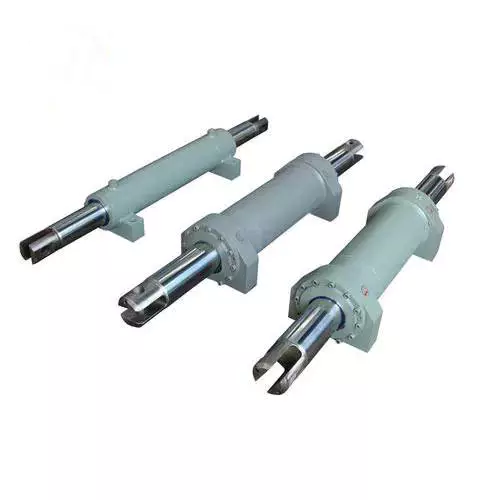
Ensuring Stable Performance of Hydraulic Cylinders Under Fluctuating Loads
Hydraulic cylinders are designed to provide stable performance even under fluctuating loads. They achieve this through various mechanisms and features that allow for efficient load control and compensation. Let’s explore how hydraulic cylinders ensure stable performance under fluctuating loads:
- Piston Design: The piston inside the hydraulic cylinder plays a crucial role in load control. It is typically equipped with seals and rings that prevent leakage of hydraulic fluid and ensure effective transfer of force. The piston design may incorporate features such as stepped or tandem pistons, which provide enhanced load-bearing capabilities and improved stability by distributing the load across multiple surfaces.
- Cylinder Cushioning: Hydraulic cylinders often incorporate cushioning mechanisms to minimize the impact and shock caused by fluctuating loads. Cushioning can be achieved through various methods, such as adjustable cushion screws, hydraulic cushioning valves, or elastomeric cushioning rings. These mechanisms slow down the piston’s movement near the end of the stroke, reducing the impact and preventing sudden stops that could lead to instability.
- Pressure Compensation: Fluctuating loads can result in pressure variations within the hydraulic system. To ensure stable performance, hydraulic cylinders are equipped with pressure compensation mechanisms. These mechanisms maintain a consistent pressure level in the system, regardless of load changes. Pressure compensation can be achieved through the use of pressure relief valves, compensating pistons, or pressure-compensated flow control valves.
- Flow Control: Hydraulic cylinders often incorporate flow control valves to regulate the speed of the cylinder’s movement. By controlling the flow rate of hydraulic fluid, the cylinder’s motion can be adjusted to match the changing load conditions. Flow control valves allow for smooth and controlled movement, preventing abrupt changes that could lead to instability.
- Feedback Systems: To ensure stable performance under fluctuating loads, hydraulic cylinders can be integrated with feedback systems. These systems provide real-time information on the cylinder’s position, velocity, and force. By continuously monitoring these parameters, the hydraulic system can make immediate adjustments to maintain stability and compensate for load fluctuations. Feedback systems can include position sensors, pressure sensors, or load sensors, depending on the specific application.
- Proper Sizing and Selection: Ensuring stable performance under fluctuating loads starts with proper sizing and selection of hydraulic cylinders. It is crucial to choose cylinders with appropriate bore size, rod diameter, and stroke length to match the anticipated load conditions. Oversized or undersized cylinders can lead to instability and reduced performance. Proper sizing also involves considering factors such as the required force, speed, and duty cycle of the application.
In summary, hydraulic cylinders ensure stable performance under fluctuating loads through features such as piston design, cushioning mechanisms, pressure compensation, flow control, feedback systems, and proper sizing and selection. These mechanisms and considerations allow hydraulic cylinders to provide consistent and controlled movement, even in dynamic load conditions, resulting in reliable and stable performance.
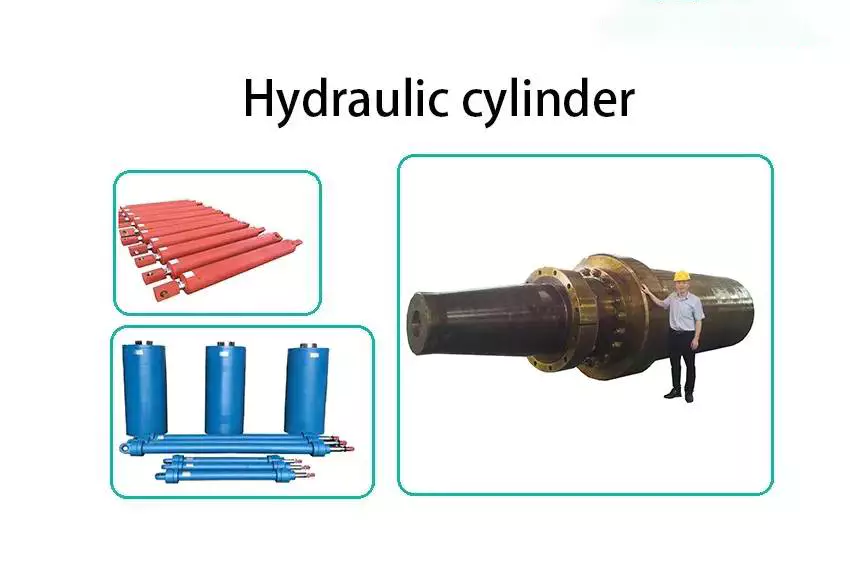
Can you explain the role and significance of hydraulic cylinders in machinery?
Hydraulic cylinders play a crucial role in machinery across various industries. They are essential components that provide controlled and powerful linear motion, enabling the operation of heavy equipment and facilitating numerous tasks. The role and significance of hydraulic cylinders in machinery can be explained in detail as follows:
Role of Hydraulic Cylinders:
– Conversion of Hydraulic Energy: Hydraulic cylinders convert hydraulic energy, typically in the form of pressurized hydraulic fluid, into linear force and motion. This conversion allows machinery to perform tasks such as lifting, pushing, pulling, clamping, tilting, and controlling various mechanisms.
– Generation of Linear Motion: Hydraulic cylinders generate linear motion by utilizing the principles of Pascal’s law. When hydraulic fluid is directed into one side of the cylinder, it applies pressure on the piston, resulting in linear movement of the piston and the attached piston rod. This linear motion can be used to actuate other components within the machinery or directly perform the required task.
– Force Generation: Hydraulic cylinders are capable of generating high forces due to the hydraulic pressure applied to the piston. The force output of a hydraulic cylinder depends on the surface area of the piston and the pressure of the hydraulic fluid. This force allows machinery to exert significant power for lifting heavy loads, applying pressure, or overcoming resistance.
– Precise Control: Hydraulic cylinders offer precise control over the linear motion and force exerted. By regulating the flow of hydraulic fluid, the speed and direction of the cylinder’s movement can be accurately adjusted. This level of control is crucial in machinery that requires precise positioning, delicate movements, or synchronization of multiple cylinders.
– Integration with Hydraulic Systems: Hydraulic cylinders are integral parts of hydraulic systems used in machinery. They work in conjunction with hydraulic pumps, valves, and actuators to create a complete hydraulic circuit. This integration allows for efficient power transmission, control, and coordination of various machine functions.
Significance of Hydraulic Cylinders:
– Heavy Equipment Operation: Hydraulic cylinders are vital in heavy machinery used in construction, mining, agriculture, material handling, and other industries. They enable the lifting and movement of heavy loads, the operation of attachments, and the performance of tasks that require high force and precision.
– Versatility and Adaptability: Hydraulic cylinders are versatile components that can be designed and tailored to meet specific machinery requirements. They can be integrated into various types of equipment and customized based on factors such as force capacity, stroke length, speed, and mounting options. This adaptability makes hydraulic cylinders suitable for diverse applications.
– Durability and Reliability: Hydraulic cylinders are built to withstand rigorous operating conditions, including high pressures, heavy loads, and continuous use. They are designed with robust materials, precise machining, and effective sealing systems to ensure durability and reliability over extended periods of operation.
– Safety and Load Control: Hydraulic cylinders provide safe and controlled operation in machinery. They offer overload protection mechanisms, such as relief valves, to prevent damage caused by excessive force or pressure. Additionally, hydraulic cylinders allow for precise load control, minimizing the risk of accidents during lifting, lowering, or positioning of heavy loads.
– Compact Design: Hydraulic cylinders offer a high power-to-size ratio, allowing for compact machinery design. Their relatively small size compared to the forces they can generate makes them suitable for applications where space is limited or weight restrictions apply.
– Energy Efficiency: Hydraulic cylinders contribute to energy efficiency in machinery. The use of hydraulic systems allows for the transfer of power over long distances without significant power losses. Additionally, hydraulic cylinders can incorporate energy-saving features such as load-sensing technology and regenerative circuits, reducing energy consumption.
Overall, hydraulic cylinders play a vital role in machinery by providing controlled and powerful linear motion. Their significance lies in their ability to convert hydraulic energy, generate high forces, offer precise control, integrate with hydraulic systems, and facilitate the operation of heavy equipment across various industries. Hydraulic cylinders contribute to increased productivity, safety, and efficiency in machinery applications, making them indispensable components in modern-day engineering.


editor by Dream 2024-11-29